
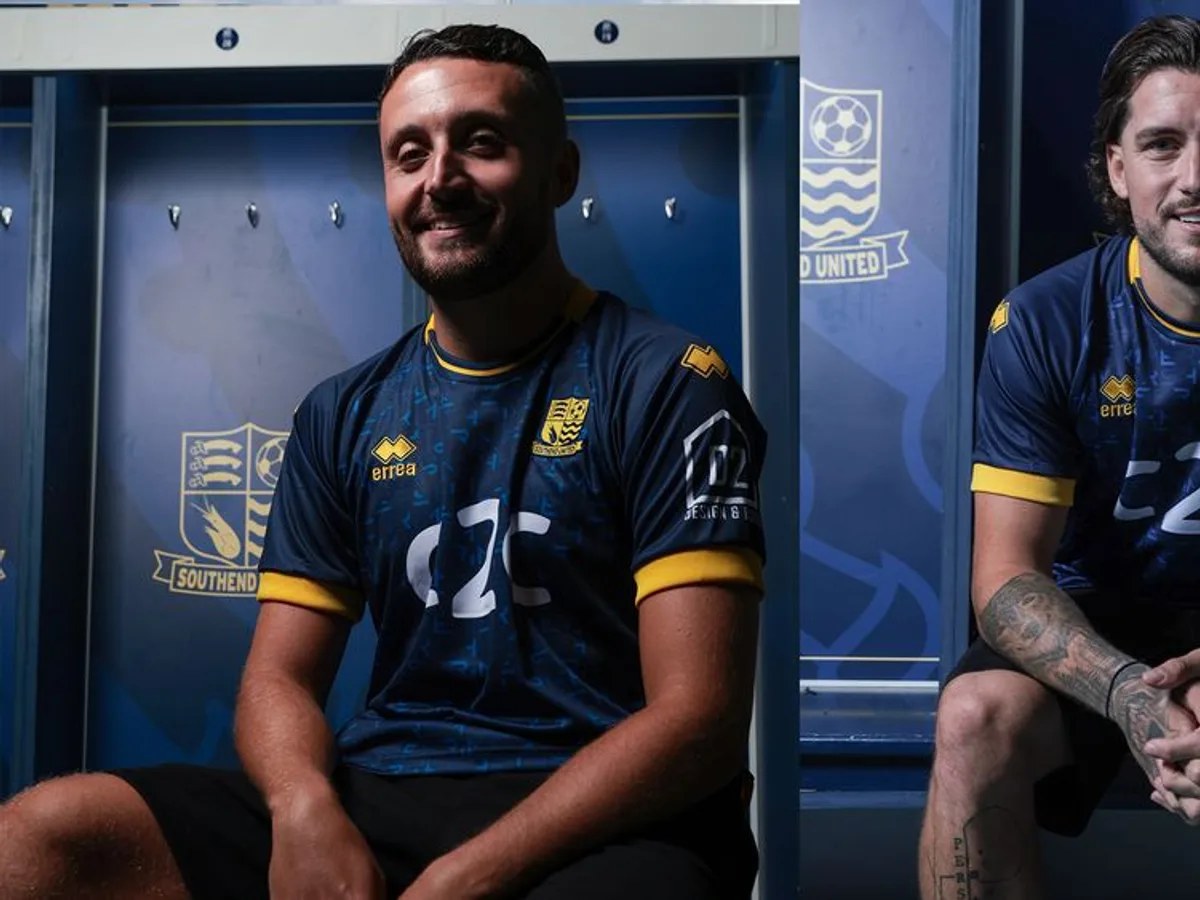
Eight arrivals gave Southend supporters a steady supply of new names between 12 June and 6 July. The deeper story sits on the other side of the list: 17 players either left or returned to their parent clubs across the retained list and later announcements.
That turnover makes this a genuine rebuild. The incoming group is not simply being added to last season’s squad; it is arriving after a large part of that group moved on.
Eight arrivals in 25 days
The sequence began with Josh Popoola, whose move from Maidenhead United was announced on 12 June subject to FA and National League approval. Darren Oldaker and Anthony Hartigan followed in a joint club update on 18 June.
Daniel Cox was announced on 27 June and Lewys Twamley on 28 June. The July business then came quickly: Rayan Oyebade joined on a season-long loan from West Ham United on 3 July, Vontae Daley-Campbell arrived on 5 July and Joe Duncan signed on a season-long loan from Bristol City on 6 July.
Popoola, Oldaker, Hartigan, Cox, Twamley and Daley-Campbell were the six non-loan arrivals announced in the period. Oyebade and Duncan were the two season-long loans. It was a concentrated run of business: eight additions in 25 days, with most of the group in place for a substantial part of preseason.
The deals are not identical. The two loanees remain attached to their parent clubs, while Popoola’s announcement carried the approval condition. Keeping those details beside the names gives a clearer picture than treating every arrival as the same kind of signing.
The exits make it a rebuild
The outward ledger began before the first arrival. Southend’s retained list on 23 May said Tom Hopper, Cav Miley, James Morton, Josh Walker and George Wind would leave when their contracts expired. The same update recorded that loanees Andrew Dallas, James Golding, Owen Mason, Alfie Massey and Noah Mawene would return to their parent clubs.
Individual releases then added more confirmed departures. Noor Husin’s exit was announced on 27 May, Gus Scott-Morriss on 28 May and Nathan Ralph on 29 May. The club confirmed Joe Gubbins would depart on 7 June and Jack Bridge on 9 June. Collin Andeng Ndi’s departure was announced on 25 June. Southend later said on 9 July that Slavi Spasov had joined Yeovil Town.
Read together, those moves show why “rebuild” is more accurate than a simple recruitment round-up. Five players were due to leave at the end of their contracts, five loanees returned and seven further departures followed. It is a large turnover of people, not just an expanded version of last season’s group.
The categories matter. A player leaving at the end of a contract, a loanee returning to a parent club and a later move are different transactions. Together, however, they explain the size of the reset facing Kieron Dyer and his staff.
There is also a human side to the list. Several of the departing players had been familiar Southend names across more than one season, while the new group arrived in quick succession. Supporters have had to say goodbye and learn a fresh set of faces at the same time.
Where the rebuild stands
As of 19 July, the incoming eight were Popoola, Oldaker, Hartigan, Cox, Twamley, Oyebade, Daley-Campbell and Duncan. The retained list and later departure announcements recorded 17 players leaving or returning to parent clubs.
That balance is the clearest measure of the summer so far. The number of arrivals is significant, but the scale of the outgoing group shows why the squad will look markedly different when the league begins.
The list is fixed to 19 July. Further signings, departures or an update to a move awaiting approval would change it, so any later version should follow the club’s next announcements.
Until then, supporters have a useful picture of the work already completed. Southend have added players through permanent deals and season-long loans while replacing a far larger outgoing group than the arrival headlines alone suggest.
It is a lot of change before a ball is kicked for points. The first competitive team sheets will show which combinations emerge, but the summer itself can already be described plainly: eight in, 17 out or back to parent clubs, and a new Southend group taking shape around those moves.