

Nine changes.
Southend’s FA Cup exit against opponents two divisions below them began with a selection that broke up almost the entire side that won at Boston. It ended with Jeffrey Sekyere heading in unchallenged from close range, two minutes from time. Between those decisions and that goal was a performance that gave Berkhamsted every reason to believe a historic win was available.
I think Southend took them too lightly. Respect expressed before a match has to survive the team sheet and appear in the football. On Saturday, neither offered much reassurance. Kieron Dyer’s subsequent admission that his players had approached the first half like a testimonial was a more accurate account of the afternoon than anything said about avoiding complacency beforehand.
The warning had been there on the last podcast. Berkhamsted guest Jamie described a fit, resilient team who would keep pushing if there was an opportunity around the 90th minute or beyond: “we are absolutely going for it”. Sekyere scored in the 88th. Southend had heard what this team would do and still left the tie within their reach.
What nine changes actually meant
Out went Vontae Daley-Campbell, Ben Goodliffe, Dan Cox and Kyle McAdam from the defence, Anthony Hartigan from midfield, and Josh Popoola, Promise Omochere, Leon Chambers-Parillon and Harry Cardwell further forward. Only Joe Duncan and Darren Oldaker retained their starting places.
In came Sam Austin, Harry Taylor, Rayan Oyebade and Sean Keogh, alongside Tommy Backwell, Sahid Kamara, Oli Coker, Zavier Massiah-Edwards and Lewys Twamley. That was a new back four, a changed midfield and an attack without a recognised senior striker.
There were genuine restrictions. Cardwell was ruled out; Ryan Colclough’s expected return had moved to Halifax. Jack Sims remained unavailable with a tender knee despite a clear scan. Goodliffe had required assessment after a chest infection and antibiotics, while Rico Richards was also being assessed following illness. Omochere had a clear scan but was absent, with Dyer explaining afterwards that his calves remained tight.
Those circumstances explain part of the selection. They do not account for every change or excuse the lack of urgency. Dyer expressly rejected sickness as an explanation for the players who took the field, saying they were fit and ready.
My preview said Saturday offered both progress and meaningful minutes; Dyer chose the minutes.
Backwell’s full debut had been central to that preview. The midfielder’s opportunity lasted 56 minutes before he was withdrawn in the triple substitution. His inclusion did not give Southend the midfield improvement the occasion needed, although the available reporting does not support turning that collective failure into a detailed individual verdict. Keogh, the 20-year-old left-back on loan from Brighton, made his first Southend appearance in a completely changed defensive unit. Coker did start, as Dyer had promised, and remained on until the 77th minute.
These were opportunities for players to establish themselves. By the end, Dyer was announcing that opportunities would become considerably harder to obtain.
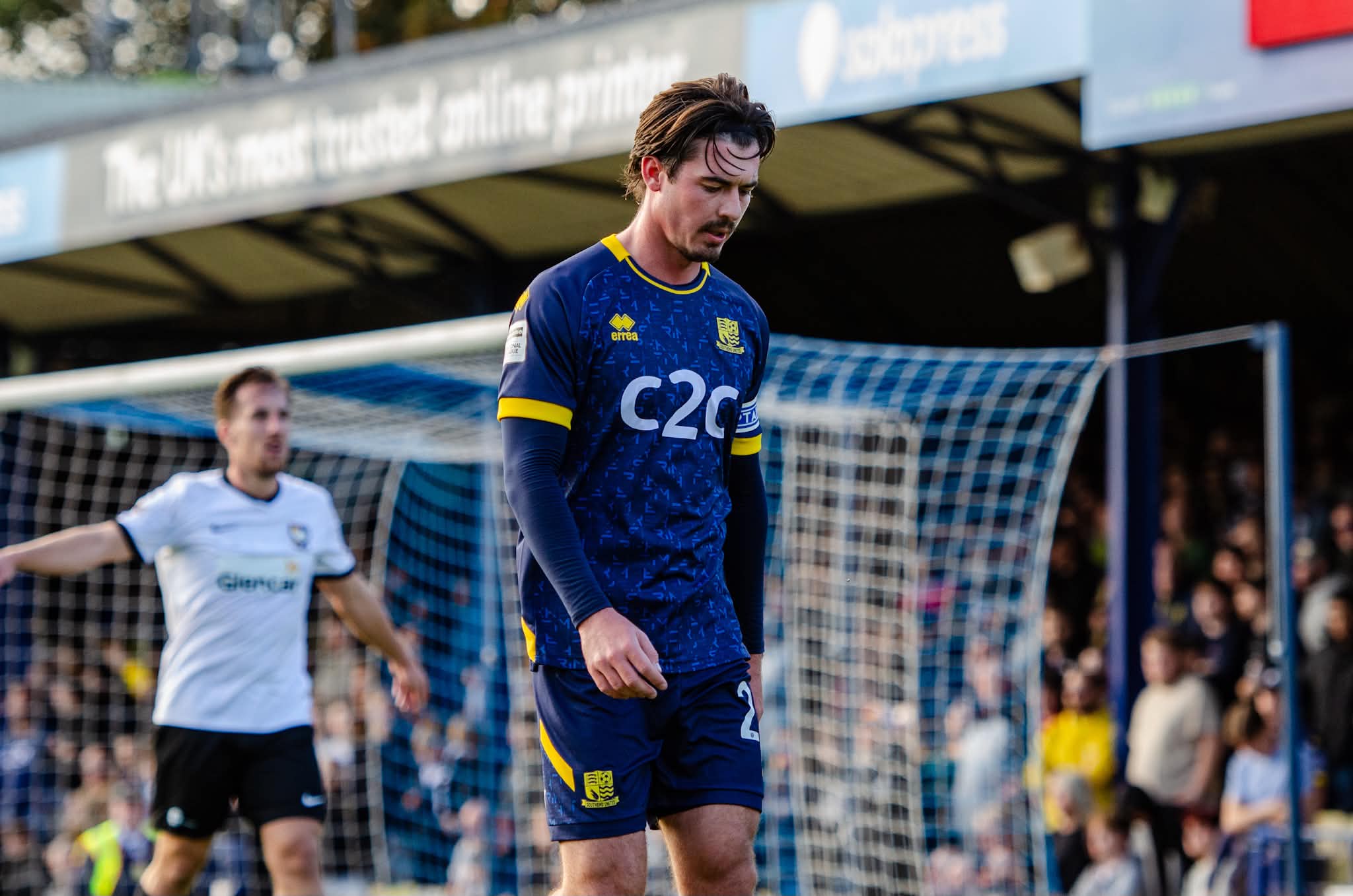
The threat in the preview, the errors in the match
The preview concentrated on Cam Hyde’s supply from Berkhamsted’s left towards Ryan Blake, with Daley-Campbell identified as the potential opponent. Austin started at right-back instead, so that anticipated contest never materialised.
The Hyde-to-Blake combination did not produce either goal. That is the honest limit of the preview’s specific warning: the decisive damage came elsewhere. It would also be generous to say Southend had comfortably contained Blake, who missed from close range at a corner. Berkhamsted had already shown enough threat to make the home side’s slow start a concern.
Duncan denied Luke Andrews early on, while Oldaker struck the post at the other end. When Twamley followed up Kamara’s shot to score his first Southend goal after 31 minutes, Southend had an advantage their performance had done little to secure. It should have been an opportunity to settle.
Instead, Oyebade’s heavy touch gave Andrews the opening to equalise in the 41st minute. Dyer declined to blame an individual mistake for the defeat, reasonably pointing to chances conceded before it. That wider responsibility does not make the error smaller. Southend had taken the lead despite playing poorly and then surrendered it cheaply.
The substitutions did not repair the afternoon. Duncan had to make an excellent save from Billie Busari; young striker Jack Stone, making his first-team debut from the bench, shot over from a promising position, and Austin threatened with two attempts. Southend had chances to regain the lead, but Berkhamsted remained capable of winning.
Billy Mardell-Smith’s late cross came from the visitors’ right, the opposite flank from the supply line examined in the preview. Sekyere was allowed a free header inside the six-yard box. An opponent whose persistence had been explained beforehand was still being offered space to win the match in the 88th minute.
Berkhamsted made their warning count
Berkhamsted deserve proper credit for what followed Southend’s mistakes. Andrews still had to finish. Mardell-Smith had to deliver the cross, and Sekyere had to convert it. Their defence had to withstand the home side’s attempts to respond.
James Gurteen and Max Rosner’s work was recognised in the visitors’ report, which named Gurteen their man of the match. Hubert Graczyk recovered from the opening goal to make important saves. Berkhamsted created chances as well as defending, and recovered from going behind without allowing the occasion to overwhelm them.
Their first appearance in the FA Cup first round proper was earned. Chris Devane’s tears afterwards, and his description of disbelief and pride, reflected the scale of that achievement. The players and staff celebrating with their supporters had every right to enjoy it.
Acknowledging that does not reduce Southend’s responsibility. It makes the failure to approach the tie properly harder to accept.
The guest called the winner
I predicted a 3-1 Southend win and retained it in the preview despite the injury doubts. I got it wrong too. The podcast discussion contained confidence that Southend could make changes and still progress, even after Jamie had explained why Berkhamsted would be dangerous.
Southend’s score is listed first.
| Contributor | Prediction | Winner called correctly? |
|---|---|---|
| Sensei Phil | 2-1 | No |
| Charlie | 4-1 | No |
| Chris B | 3-1 | No |
| Katie | 4-0 | No |
| Jamie, Berkhamsted guest | 1-3 | Yes |
Jamie was the only contributor to call the right winner. His explanation of Berkhamsted deserves more attention now than the confidence attached to the Southend predictions.
The cost extends beyond a poor Saturday. Berkhamsted take the first-round place and the opportunity offered by Monday’s draw, when League One and League Two clubs enter. The £9,375 winner’s award goes with them. Southend receive £3,125 for losing, a £6,250 difference before considering any possible future tie.
Dyer’s consequence must mean something
In his post-match interview, published by the club, Dyer said his half-time message was that Berkhamsted were playing an FA Cup tie while Southend were playing a testimonial. He also announced that his attempt to distribute minutes would end, with a settled group of roughly 11 to 13 players taking most of the games.
That is the consequence of Saturday. Dyer accepted that he might have changed too much, while insisting the selected team should have been capable of winning. Both propositions can be true. The responsibility for choosing so much disruption belongs to him; the responsibility for the performance extends across those who played.
The anger among supporters is understandable. ShrimperZone’s post-match discussion includes criticism of recruitment and squad depth, alongside supporters defending the season’s progress and congratulating Berkhamsted. It also contains accounts of abusive language around families. Those are attributed supporter observations, not a licence to describe the whole crowd in the same terms.
Dyer’s appeal, reported by the Echo, was to direct anger towards him rather than personally abuse his young players. I agree with that distinction. It leaves ample room to criticise a selection and performance that cost Southend a cup run.
Being third in the league cannot make this acceptable. The next team sheet will show how far Dyer intends to act on his promise of a settled group; the next performances must show whether the urgency can survive beyond his instructions.
Berkhamsted kept going. Southend got what their performance deserved.
Match details
Result: Southend United 1-2 Berkhamsted. Half-time: 1-1.
Competition: Emirates FA Cup, fourth qualifying round. Date: Saturday 17 October 2026. Venue: Roots Hall.
Goals: Southend: Lewys Twamley 31. Berkhamsted: Luke Andrews 41, Jeffrey Sekyere 88.
Southend XI: Joe Duncan; Sam Austin, Harry Taylor, Rayan Oyebade, Sean Keogh; Tommy Backwell, Darren Oldaker; Sahid Kamara, Oli Coker, Zavier Massiah-Edwards, Lewys Twamley.
Substitutions: Leon Chambers-Parillon, Vontae Daley-Campbell and Jack Stone replaced Kamara, Massiah-Edwards and Backwell in the 56th-minute triple change; Josh Popoola replaced Twamley, 68; Anthony Hartigan replaced Coker, 77.
Other named substitutes: Josh Barrett and Dan Cox.
Attendance: 4,610. Berkhamsted’s report and the Yellow Advertiser give 362 away supporters; the Echo’s live feed records 385.
Your say
Comments
Join the conversation about this story.
From the Shrimpers
0 commentsBe the first to comment.