
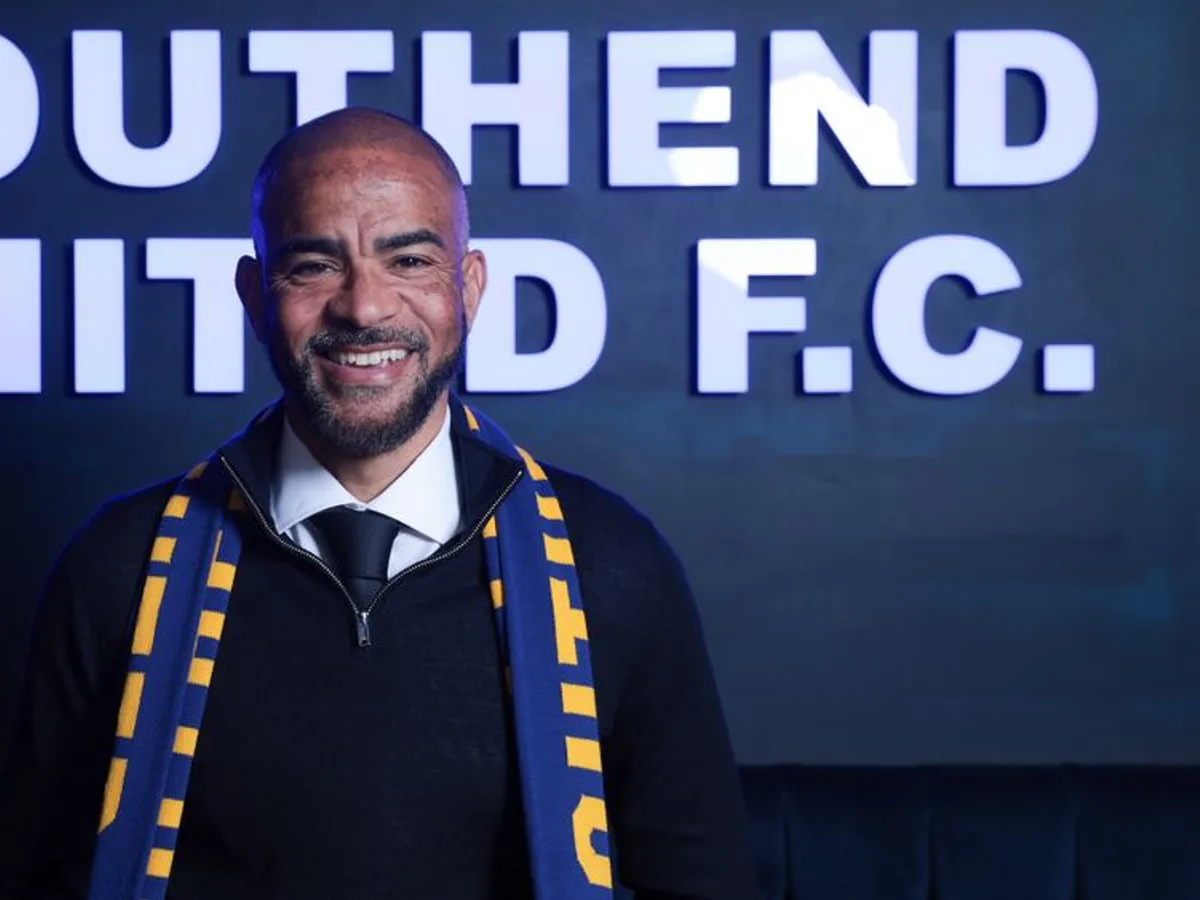
Southend appointed Kieron Dyer as head coach on 8 June 2026, giving him an initial two-year contract with a club option for a third. He arrived from Chesterfield, where he had worked on Paul Cook’s first-team staff, after earlier coaching roles at Ipswich Town.
The BBC described it as Dyer’s first senior managerial role. That is the central tension in the appointment: Southend have chosen a familiar football figure with coaching experience and recent knowledge of the National League, but no previous senior results record to judge.
The club published Dyer’s first interview the following day. It gave supporters an introduction to the new head coach and his ambitions for the job. The more revealing part begins once Southend are playing for National League points.
A first senior job
Dyer’s coaching background explains the route to Roots Hall. His work at Ipswich and Chesterfield placed him inside established senior staffs, close to the preparation, selection and matchday decisions that shape a season. Southend have now asked him to take final responsibility for that work.
That step is substantial. A head coach becomes the public face of every team sheet, substitution and difficult Saturday, even when decisions are shared across a wider staff. Dyer’s playing reputation may bring immediate attention, but it cannot do the job for him.
There is opportunity in the blank page. Supporters are not comparing his first Southend month with a fixed managerial pattern from another club. They can watch this team develop on its own terms, with the summer signings, retained players and coaching staff building the first version of Dyer’s Southend together.
The initial two-year deal also matters. It gives the appointment a horizon beyond the opening weeks while leaving the club option for a third season in Southend’s hands. That is enough time to establish an idea of progress, but the weekly demands of the league will begin immediately.
The fair questions for August
The Talking Shrimpers view is that supporters do not need a slogan to judge the early work. They need clear signs on the pitch and enough competitive football to place those signs in context.
Does the side look clear about what it is trying to do? Do changes during a match help rather than confuse? When a performance goes flat, is there a useful response in the next game? Those are observations available from the stands. They are different from pretending to know the private detail of training, recruitment meetings or the dressing room.
Results will matter because this is senior football, not an apprenticeship played outside the table. So will the way Southend reach those results: whether performances connect from week to week, whether players respond to setbacks and whether the choices from the bench make the team more effective.
Dyer will also be judged against Southend’s circumstances rather than his playing reputation. Roots Hall has its own expectations, recent history and impatient Saturdays. The name on the head coach’s office may draw attention, but the work has to make sense for this club and this squad.
August will not answer every question, but it will provide the first useful material. The opener at Altrincham, the first home games and the response to an awkward afternoon will tell supporters more than another close-season soundbite.
Patience without a free pass
Patience can sound like a request not to judge. Here it should mean judging what can actually be seen, once a run of competitive matches has given those observations some weight.
Dyer’s appointment gives Southend a fresh voice and supporters a reason to look forward. Neither the contract nor the coaching CV removes the demand for progress once the campaign begins.
The promise is straightforward: an experienced former player taking his first senior job after learning inside established coaching teams. The unknowns are equally clear. Southend’s 2026/27 football will decide how the promise stands up.